Green Energy Solutions
Solar in Motion — powering South Africa's clean transport revolution
Cut emissions. Lower costs. Power your business. Energize your operations sustainably.
Green Energy Solutions
Solar in Motion — powering South Africa's clean transport revolution
Cut emissions. Lower costs. Power your business. Energize your operations sustainably.
Epic Green Hubs
Green energy hubs for the SADC region
Epic designs and delivers modular green energy hubs that combine solar, battery storage and EV charging into one integrated system. Built for African conditions and SADC, our solutions keep vehicles, people and places powered – even when the grid doesn’t.
How it works
How Epic green works
Every site is different – but the way we help you cut emissions and risk is simple. We follow a clear process from understanding your operation to monitoring real-world results.
Understand your operation
We capture a few key details about your current energy or transport use – such as the type of site, typical consumption patterns and how you currently power operations. Epic uses this information to estimate your potential emissions reduction with Epic green energy solutions.
Engineer the right solution
Our team designs a modular solution that combines solar, storage and EV charging infrastructure to suit your site. We consider your operational profile, safety requirements and future growth, and configure a system that can scale as your demand increases.
Deploy, monitor and optimise
Once deployed, your energy hub is monitored in real time. Our platform tracks performance, alerts your team to any issues and provides data to optimise usage, enhance resilience and report on CO₂ savings over time.
What’s included
Inside an Epic energy hub
Epic green energy hubs are built as modular building blocks. Each site can be tailored, but every system is based on four core components working together.
Solar PV and battery storage
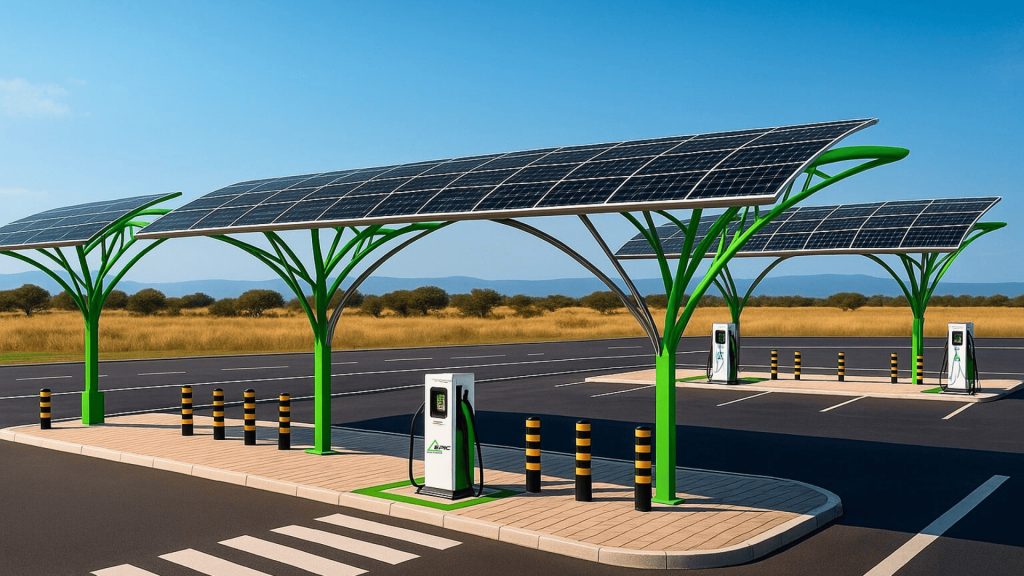
High-efficiency solar panels feed into containerised battery storage, typically starting from 600 kWh per unit and scaling upwards as needed. This combination supplies clean, reliable power for EV charging and critical loads – even during extended grid interruptions.
EV charging infrastructure
Fast and managed chargers sized to your fleet and duty cycles – from light vehicles to heavy trucks – integrated into your site layout and power availability.
Energy management system (EMS)
A smart energy management system balances solar, storage and grid input to maximise renewable energy usage. It protects your assets, reduces waste and ensures your system operates within agreed performance parameters.
Civils and safety infrastructure
Engineered canopies, bollards, markings and civil works create a safe and intuitive environment for drivers and pedestrians. Layouts are designed to optimise traffic flow, protect equipment and deliver a premium user experience on each site.
Why epic Green
Engineered for resilience savings impact
Resilient operations
Support when the grid fails
Predictable energy costs
Control your long-term spend
Visible ESG & CO₂ impact
Measurable, reportable results
Why epic Green
Engineered for resilience savings impact
Resilient operations
Support when the grid fails
Predictable energy costs
Control your long-term spend
Visible ESG & CO₂ impact
Measurable, reportable results
CO₂ IMPACT INSIGHTS
Understand your potential CO₂ savings
Epic can help you estimate how much CO₂ you could save by switching to Epic green energy solutions. In an initial discussion, we use your site data and internal models to give you a high-level view of potential impact before you commit to a project.
-
Quick
A short discussion and a few key inputs are enough to get a high-level view of your potential savings. -
Clear
We give you indicative ranges for potential CO₂ reductions and energy cost improvements. -
Shareable
Use the outputs as a basis for internal planning, budgeting and sustainability conversations
No obligation – we’ll simply help you understand what’s possible for your sites.
Software and monitoring
Live intelligence for energy and fleets
Epic’s platform brings your solar, storage, chargers and grid supply into one view, so you can monitor performance, protect assets and make decisions faster – all from a live, fleet-ready dashboard.
Energy & sites
See which hubs are online and how they’re performing.
Alerts & events
Get notified about low storage, faults and temperature events in time to act.
Reporting & CO₂
Track performance and estimated CO₂ savings over time for ESG reporting.
live dashboard
See your hubs and fleets at a glance
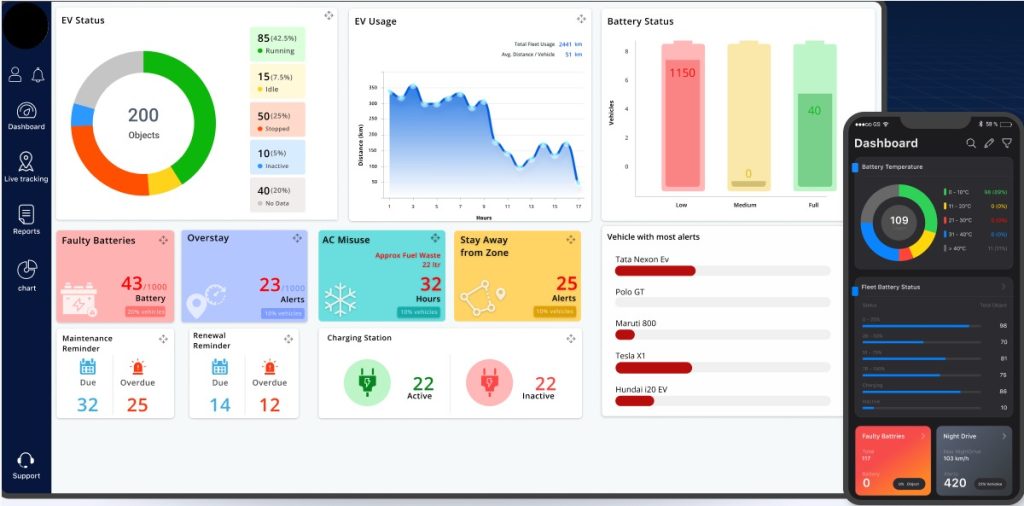
A single view of energy hubs, charging activity, alerts and fleet health – so your team can spot issues quickly and keep operations running smoothly.
- Overall status and alerts
- Charging sessions and energy use
- CO₂ impact and performance trends
What you can see
- Site-level solar, storage and grid performance
- Charging sessions by vehicle, time and energy used
- Energy flows across generation, storage and loads
- Alerts for faults, downtime and abnormal behaviour
What you can do
- Adjust charging schedules to avoid peak tariffs
- Prioritise critical loads during outages or constraints
- Plan maintenance using real usage and performance data
- Export data to support ESG and internal reporting
Software and monitoring
Live intelligence for energy and fleets
Epic’s platform brings your solar, storage, chargers and grid supply into one view, so you can monitor performance, protect assets and make decisions faster – all from a live, fleet-ready dashboard.
Energy & sites
See which hubs are online and how they’re performing.
Alerts & events
Get notified about low storage, faults and temperature events in time to act.
Reporting & CO₂
Track performance and estimated CO₂ savings over time for ESG reporting.
live dashboard
See your hubs and fleets at a glance
A single view of energy hubs, charging activity, alerts and fleet health – so your team can spot issues quickly and keep operations running smoothly.
- Overall status and alerts
- Charging sessions and energy use
- CO₂ impact and performance trends
What you can see
- Site-level solar, storage and grid performance
- Charging sessions by vehicle, time and energy used
- Energy flows across generation, storage and loads
- Alerts for faults, downtime and abnormal behaviour
What you can do
- Adjust charging schedules to avoid peak tariffs
- Prioritise critical loads during outages or constraints
- Plan maintenance using real usage and performance data
- Export data to support ESG and internal reporting
Project & Pilots
Example Epic green energy hubs
Epic is working with partners to design and deliver green energy hubs tailored to real SADC operations – from national routes to high-traffic destinations. These three example deployments show what’s possible.
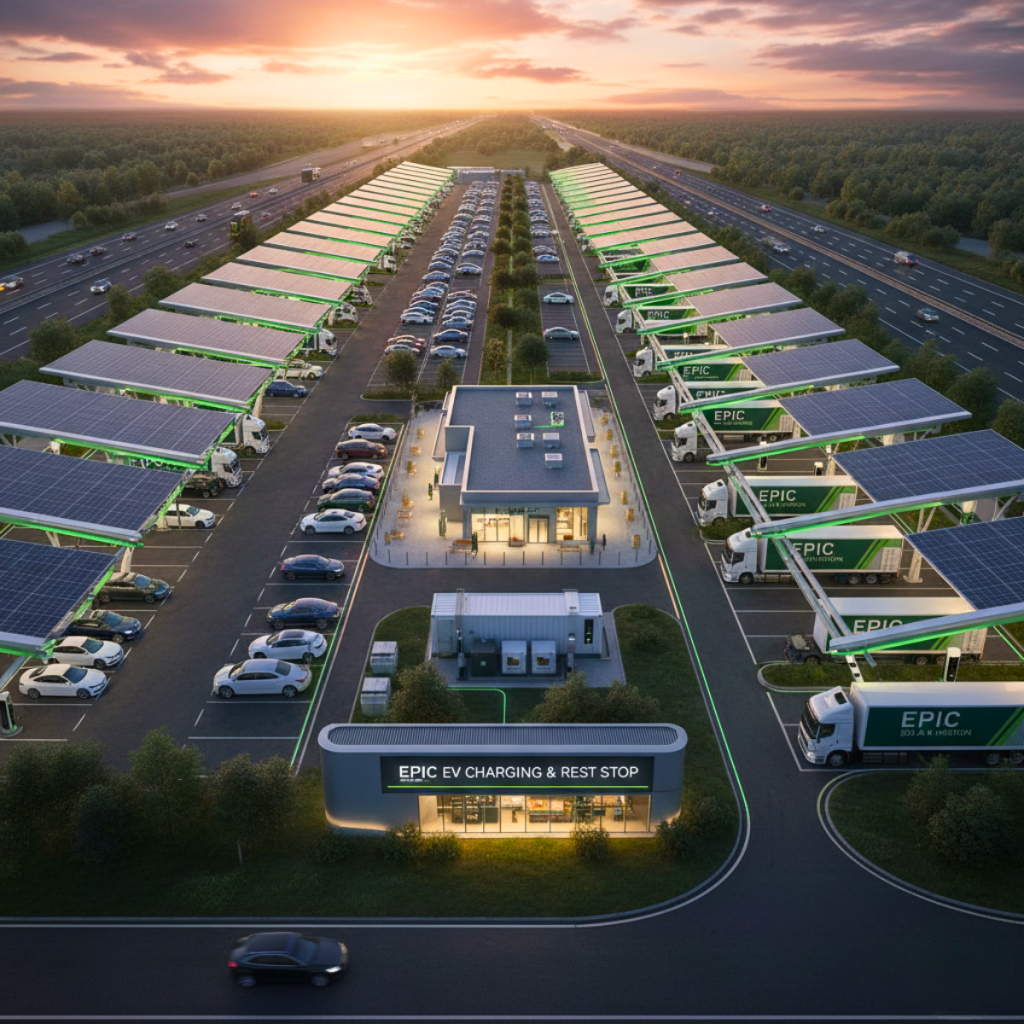
National route EV & truck hub
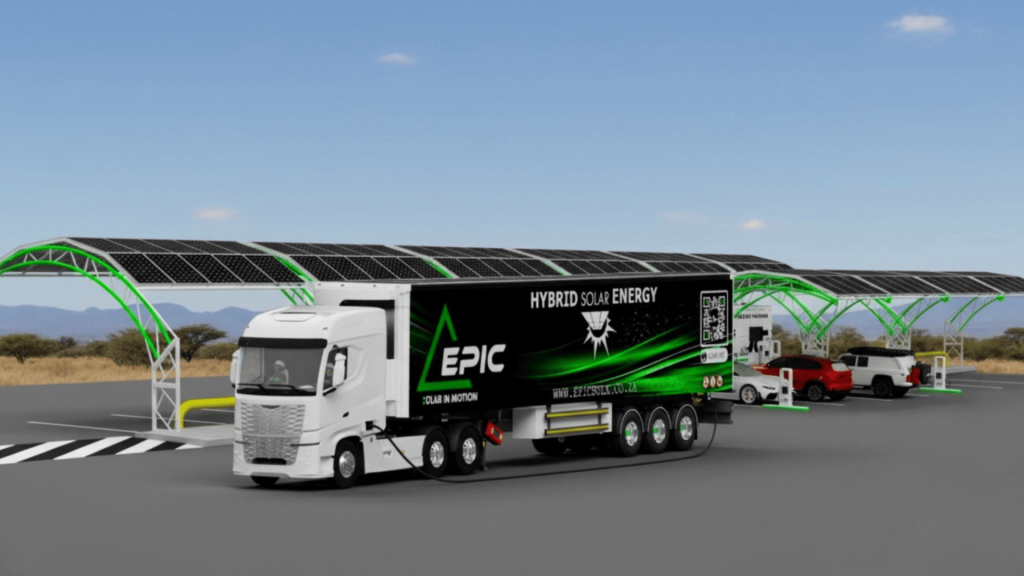
A conceptual hub on a key national route, combining solar canopies for passenger EVs with dedicated truck charging lanes. Designed to keep operating through grid instability, with amenities that improve safety and comfort for drivers.
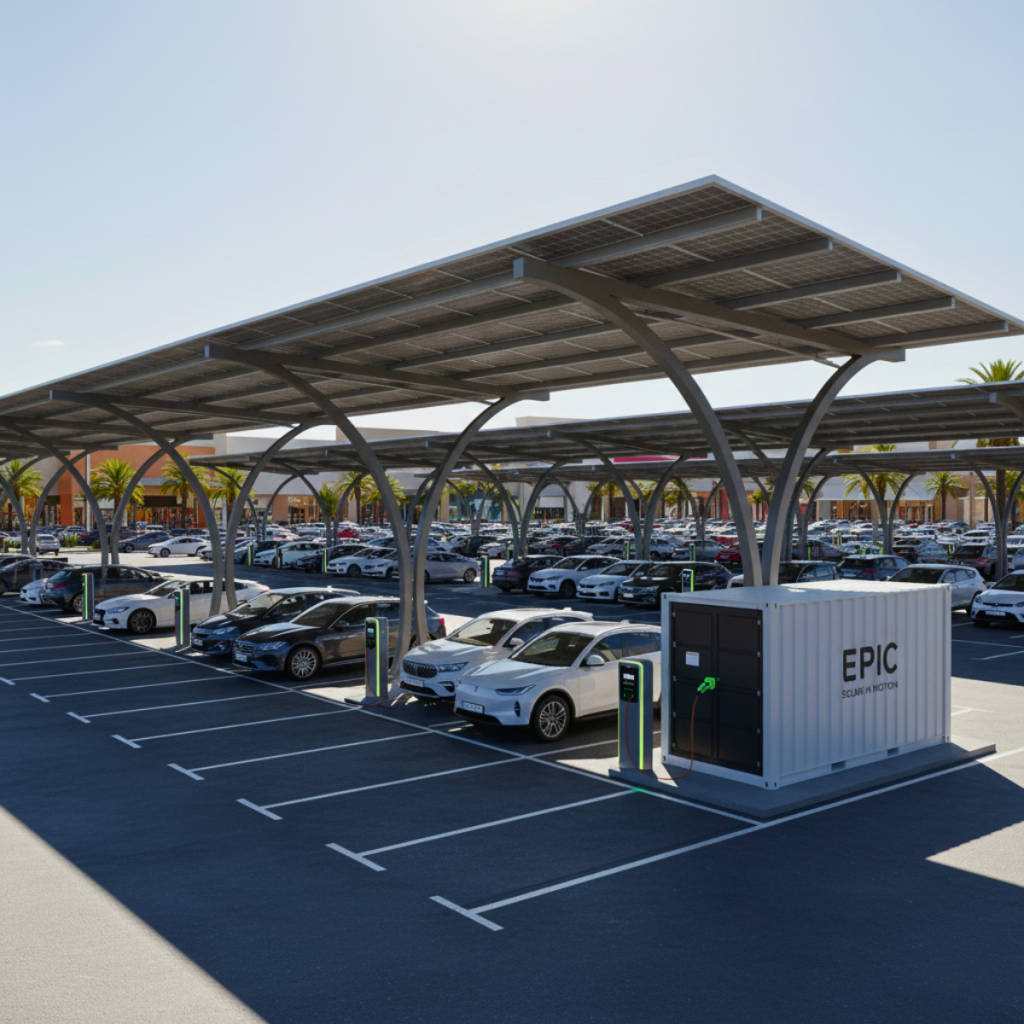
Mall solar carport & EV charging
A multi-bay solar carport integrated into an existing shopping centre, providing shaded parking and EV charging for customers. Solar and storage reduce reliance on grid power and diesel during peak trading hours.
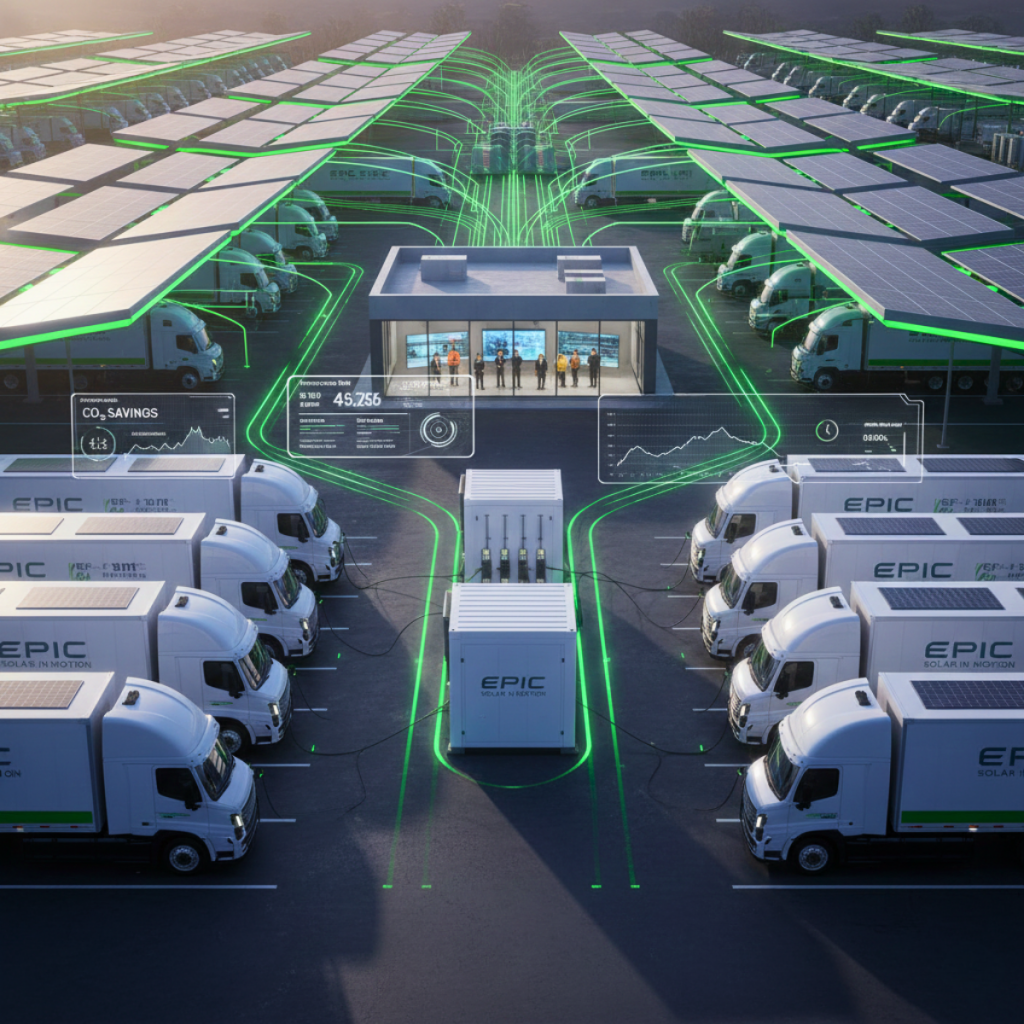
Fleet depot energy hub
An energy hub at a logistics depot, sized to support a growing EV and hybrid fleet. The system powers chargers, yard lighting and key operational loads, while feeding performance and CO₂ savings data into the operator’s reporting.
Project & Pilots
Example Epic green energy hubs
Epic is working with partners to design and deliver green energy hubs tailored to real SADC operations – from national routes to high-traffic destinations. These three example deployments show what’s possible.
National route EV & truck hub
A conceptual hub on a key national route, combining solar canopies for passenger EVs with dedicated truck charging lanes. Designed to keep operating through grid instability, with amenities that improve safety and comfort for drivers.
Mall solar carport & EV charging
A multi-bay solar carport integrated into an existing shopping centre, providing shaded parking and EV charging for customers. Solar and storage reduce reliance on grid power and diesel during peak trading hours.
Fleet depot energy hub
An energy hub at a logistics depot, sized to support a growing EV and hybrid fleet. The system powers chargers, yard lighting and key operational loads, while feeding performance and CO₂ savings data into the operator’s reporting.
Frequently asked questions
FAQs
Can Epic green energy hubs operate during load-shedding or grid failures?
Yes. Each hub is designed with solar generation and battery storage so that critical loads can continue to operate during grid interruptions. The exact level of back-up (hours of autonomy, number of chargers supported, additional loads such as lighting or refrigeration) is defined during the design phase for your specific site.
Do the hubs have to be completely off-grid?
Not necessarily. Many deployments will use a hybrid approach – combining solar, storage and the existing grid connection. This often provides the best balance between resilience, cost and practicality. Fully off-grid designs are possible for certain locations, but are assessed on a case-by-case basis.
What types of sites are best suited to Epic green energy hubs?
Typical sites include shopping centres, logistics depots, truck stops, office and industrial parks, and public sector facilities along key corridors. The core requirement is suitable space for the canopies and containerised equipment, along with sufficient demand for EV charging or critical loads.
How long does it take to design and deploy a hub?
Timelines depend on the size of the system, site readiness and permitting. As a guide, a typical project moves through assessment and design, commercial approval, then fabrication and installation. Your Epic team will outline expected timelines once your site and requirements have been reviewed.
Can Epic work across different SADC countries?
Yes. Epic focuses on the broader SADC region and works with local partners where required. Regulatory requirements, standards and grid conditions differ by country, so each deployment is planned in line with local frameworks.
What ongoing maintenance and monitoring is required?
The hubs are designed for robust, predictable operation. Routine maintenance includes visual inspections, cleaning of panels where needed and periodic checks on electrical and mechanical components. The monitoring platform helps identify issues early so maintenance can be targeted and downtime minimised.
How accurate are Epic’s CO₂ savings estimates?
Epic’s CO₂ savings estimates are designed as high-level planning guides based on your site data, operating assumptions and experience from similar projects.
Frequently asked questions
FAQs
Can Epic green energy hubs operate during load-shedding or grid failures?
Yes. Each hub is designed with solar generation and battery storage so that critical loads can continue to operate during grid interruptions. The exact level of back-up (hours of autonomy, number of chargers supported, additional loads such as lighting or refrigeration) is defined during the design phase for your specific site.
Do the hubs have to be completely off-grid?
Not necessarily. Many deployments will use a hybrid approach – combining solar, storage and the existing grid connection. This often provides the best balance between resilience, cost and practicality. Fully off-grid designs are possible for certain locations, but are assessed on a case-by-case basis.
What types of sites are best suited to Epic green energy hubs?
Typical sites include shopping centres, logistics depots, truck stops, office and industrial parks, and public sector facilities along key corridors. The core requirement is suitable space for the canopies and containerised equipment, along with sufficient demand for EV charging or critical loads.
How long does it take to design and deploy a hub?
Timelines depend on the size of the system, site readiness and permitting. As a guide, a typical project moves through assessment and design, commercial approval, then fabrication and installation. Your Epic team will outline expected timelines once your site and requirements have been reviewed.
Can Epic work across different SADC countries?
Yes. Epic focuses on the broader SADC region and works with local partners where required. Regulatory requirements, standards and grid conditions differ by country, so each deployment is planned in line with local frameworks.
What ongoing maintenance and monitoring is required?
The hubs are designed for robust, predictable operation. Routine maintenance includes visual inspections, cleaning of panels where needed and periodic checks on electrical and mechanical components. The monitoring platform helps identify issues early so maintenance can be targeted and downtime minimised.
How accurate are Epic’s CO₂ savings estimates?
Epic’s CO₂ savings estimates are designed as high-level planning guides based on your site data, operating assumptions and experience from similar projects.